
Ask Us About a Rewire
904-878-5969 info@spectrumwireworks.com
Addressing Issues
Breaking Down Whole-House Rewiring Projects
Whole-House Rewires — What You Really Need to Know
If you’ve been told your home needs a rewire, chances are your stress level just jumped a few notches. I get it. A whole-house rewire sounds serious — and honestly, it is a big project.
So let’s talk through the questions I hear most often, in plain language.
Do I really need a whole-house rewire?
Not every home does. But if your house has:
Knob-and-tube, cloth, or aluminum wiring
-
No grounding on outlets
-
Frequent electrical issues
-
Insurance or inspection flags
…then a rewire may be the safest and most practical solution. Sometimes spot fixes just don’t make sense anymore.
Can’t you just replace the bad parts?
Sometimes, yes. But often the “bad parts” are spread throughout the entire system. Patching a few sections can leave you with:
Mismatched wiring types
-
Ongoing inspection problems
-
Safety risks that aren’t fully resolved
A full rewire gives you a clean slate — one system, built to current code.
How long does rewiring a house take?
It depends on the home and the scope of other structural work taking place, but typical work timelines without outside interruptions look like:
Smaller homes: several days to about a week
Larger or multi-story homes: one to two weeks or more
Historic homes: sometimes longer
We’ll talk through realistic timelines before anything starts.
How disruptive is a rewire, really? Do I need to move out? Can we just move furniture around as needed?
I won’t sugarcoat it: rewires are usually invasive. In most cases, yes, you’ll need to be out of your home — at least temporarily.
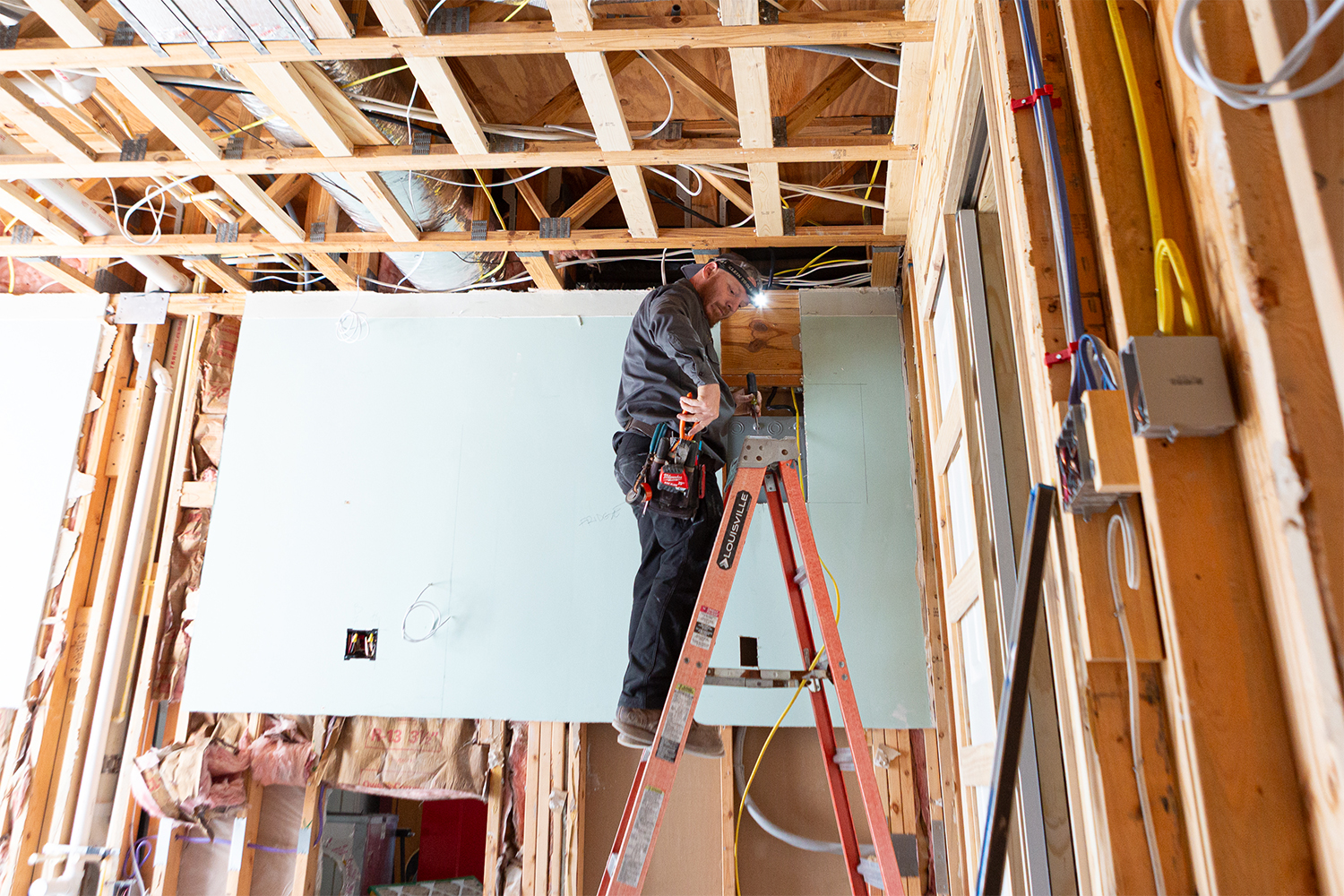
Walls, ceilings, and sometimes flooring will be partially opened, outlets/receptacles and switches are removed and replaced, and power will be off at times. This is not a “grin and bear the inconvenience” type of project for you and your household.
Rewires are property-wide jobs that require unrestricted access to many areas of your home at different stages of the process. Active work isn’t limited to one room at a time. Having the home vacant and cleared with room to work allows full access to the electrical system, keeps everyone safe, and helps us move faster.
And while we try to keep a tidy worksite, drywall dust is inevitable. It’s much easier to clear up mostly-empty rooms than to attempt to dust, vacuum, sweep, mop, wash, or steam-clean every item in your household. Working around resident schedules and family activities – not to mention the risk of damaging furniture, art, and personal items – during a full rewire slows progress significantly and adds stress for everyone.
That said, a full move-out is not always required. Storing as much as possible into sheds and garages, and pushing bulky items (well-protected with blankets and drop cloths) away from walls may be enough, especially in larger rooms.
Is a rewire worth it if I’m renovating anyway?
Absolutely. If walls are already being opened for a remodel, that’s often the perfect time to rewire.
You’re already dealing with disruption, and combining projects can reduce overall labor and repair costs, shorten total construction time, and prevent the need to disturb new finishes later.
Will a rewire help with inspections or insurance?
Yes — this is one of the most common reasons people call us.
A proper rewire can:
Clear inspection red flags
-
Satisfy insurance underwriting requirements
-
Remove uninsurable wiring types
-
Make a home easier to sell or refinance
Will my house look like a construction zone?
During the work? Yes. When it’s done? No.
Electrical work is only one part of the process — drywall repair and paint typically follow, leaving you with a refreshed living space. We communicate progress so the electrical side is complete and ready for finish work.
What’s the biggest mistake homeowners make with rewires?
Waiting too long. Once a home has known wiring issues, delay often leads to:
More expensive emergency or short-term repairs
-
Insurance non-renewals
-
Failed sales or renegotiated deals
- Increased risk of fires, shocks, and failing circuits
A rewire isn’t fun, but it’s the right long-term decision.
Final Thought from a Fellow Homeowner
A whole-house rewire isn’t about luxury upgrades (though it can certainly provide flexibility to add fun things like hot tubs, saunas, ADUs, or shore power for RVs); it’s about safety, reliability, and peace of mind. When it’s necessary, doing it right the first time matters.
If you’re not sure whether your home truly needs a rewire, that’s okay. A straightforward assessment can tell you a lot. Give us a call or drop a line!